Clues and the Web of Information
by Josh Domanski
Introduction
Mysteries and investigations are one of the key pillars of tabletop roleplaying. However, they are also one of the more challenging types of games to run and play, and even systems that focus squarely around that idea may not adequately support a GM in creating mysteries of their own. One of the core focuses of the Facilitator’s Guide in the Liminal Horror Deluxe Edition was to amend this and provide a framework to build off of, discussing types of mysteries and topics like how to write compelling clues. One of the ideas that’s briefly touched upon is the “web of information”. This is a concept I came up with, but it’s really just a distillation of common advice. So this post will dive into the web of information, using that framework to create your clues, and how that will benefit your prep and mystery writing.
Resources
Before properly diving in, I wanted to point out a few additional places to turn to for inspiration if you want a deeper dive into honing your craft of creating compelling mysteries.
Jason Cordova: Jason is best known for Brindlewood Bay and the slew of Carved from Brindlewood games that would follow in its wake. However, one of the really great parts of the Gauntlet community is the sense of collaboration that has been fostered. One way in which this is done is through a ton of writing workshops and seminars, diving into the secrets of crafting CfB mysteries. One I would recommend is the Public Access Writing Contest Workshop.
Joseph R Lewis: Joseph is known for writing some of the best modules of the OSR, but he’s also been pumping out a video series on writing adventures. While I’d recommend checking out all of these, one that is particularly relevant to this topic is How to Write Hooks and Rumors.
Tomb of Lime Gaming: Matt from Tomb of Lime has a whole series of videos discussing a range of TTRPG concepts, but in particular I would recommend Player Agency Within Mystery Narratives. I don’t know if I’d fully agree with all of the conclusions, but there’s lots of good food for thought here.
Weaving the Strands
So what is the web of information? In a phrase, it’s the red strings of a conspiracy board. The initial idea was to write modules in a manner that provides the reader with actionable information through terse prose that can be easily remembered and implemented during play. Instead of diving into granular details, complexity is created by drawing connections between the elements of the scenario and creating a cyclical flow of information. This way you can keep the focus on what’s happening at the table and not be concerned about forgetting some minute detail buried in a paragraph of text.
What does this look like in practice? Let’s start with a basic example. There’s a town with a secretive cult abducting citizens. At the start of the investigation, there are two witnesses:
- Nate: A retired plumber who still wears his favorite filthy pair of work overalls. Ornery, opinionated, and incredibly outspoken.
- Jeremy: The night shift worker at a convenience store. Soft spoken and well accustomed to seeing weird shit.
Nate’s outspoken nature marks him as an obvious starting point, as he’s going to go blab the ears off of the Investigators once he catches wind that they’re looking into the case. But Jeremy probably isn’t going to be the type to make it known that he’s seen something amiss, and will likely remain quiet until asked. However, Jeremy has useful clues, so we want to draw the Investigators’ attention to him. This is where the web of information comes into play.
The goal here is to create connections between the pieces of our scenario through actionable information, therefore incentivising interaction and rewarding engagement. We can do that here with a single line, “Nate despises Jeremy, though Jeremy is unaware of this”. Reading this, you’ve probably already got an idea formed in your head on how to make this information actionable. For me, it’s pretty simple. When the Investigators go talk to Nate, he’s going to try and place blame onto Jeremy for the events that are transpiring. So by talking to Nate, the Investigators get whatever clue he has to offer as well as a direct follow-up, where they can then go talk to Jeremy and get whatever clues he may have.
Building the Web
While the example above represents a very simple means of utilizing the web of information, the concept is also incredibly useful for creating and managing complex mysteries.
So how do we expand upon this to build our mysteries? The first step is the scaffolding. We need to create the nodes that we will then connect with our webs. The Carved from Brindlewood mysteries are some of the best out there at providing this framework, so let’s take a look at what they provide and see how we can build off it. Each mystery gives you the following:
- Question to solve. This is the core of the mystery that we’re attempting to unravel.
- Locations to search. These focus in on the core locations that are assumed to have some involvement in the mystery. It’s not every building or room in a location, but it’s the places we want to focus on and draw attention to.
- NPCs to interact with. These are the key people wrapped up in the mystery, either as victims, witnesses, or potential perpetrators.
- Dangers to avoid. These are the monsters and things that go bump in the night. Clues to find. The tools we can utilize to solve the mystery.
While the CfB games take the “play to find out” approach where the players collectively determine the answers to the mystery rather than it being established ahead of time, this is still the core framework to build off of for more traditional mysteries. When you get started, lay out your locations, give your NPCs some goals and places to be, then use that list of clues to seed the locations and things the NPCs might know to create that web of connection for the players to unravel. Build the conspiracy board that you want your players to eventually create for themselves.
Creating Clues
Clues are often the hardest part of the mystery to draft, as they need to be actionable, but not so encompassing that a single clue can solve the mystery on its own. So what’s the best way to start integrating clues into the web of information we’re creating? At the point where you’re writing clues, it’s advisable that you already have the central question of your mystery mostly figured out. We want to work backwards from that solution to provide hints that lead in that direction.
This is where it’s useful to look back at the CfB mysteries. A typical CfB mystery will provide you with about 20 clues. Gauntlet community member Chaotic has created a good guideline for breaking these clues down into categories:
- 5 clues that come from talking to people.
- 5 clues from investigating the locations.
- 5 clues that have opinions about the answer to the Question.
- 5 clues that don’t immediately belong, but have things to say about the overall theme of the mystery.
As mentioned, the CfB mysteries take a different approach to clue presentation and the solution to the mystery, but this framework is still very useful as a point of consideration when you’re starting to pull together clues.
For Liminal Horror, we’ve taken a similar approach and group clues into three primary categories:
- Physical: Objects directly in the environment that reveal information.
- Linguistic: Things that are spoken or written down by NPCs.
- Behavioral: Actions of the NPCs and the horrors.
For each mystery you present the players, shooting for about 5 of each of these clue types is a good baseline to begin to work from. If you’d like to know what we think are the keys to writing compelling clues beyond this, we’ve covered it in a few pages in the Deluxe Edition, so I won’t worry about repeating it verbatim here.
Weaving the Mystery

Let’s bring this together into a practical example.
In The Bloom, there’s a secondary mystery going on surrounding the Pickman Lodge. This is a location that used to be a draw for tourists during the hunting season, but the previous owner passed away and the property was sold to a pair of new transplants who turned it into a private residence. Our goal here is to draw the players in so that they explore this mystery, so how do we lay out the bait and set the hook? This is where those clue types and the web of information comes into play.
- Physical: The Pickman Lodge sits on the side of the mountain looking down upon Coldwater. You can see it from the town, as it literally looms over it. So when the Investigators enter the town for the first time, this is one of the first clues they’re going to get, as that’s a location that is begging to be visited. Simply by geographic location and line of sight, a thread of the web has been created.
- Linguistic: The new owners of the lodge are seemingly perfectly nice folks, but they stand out from the townsfolk since they’re transplants. Naturally, the townsfolk don’t like them very much. They’re going to gossip about them, note how they’re odd, or even just make up rumors about them. If the Investigators visit the Coldwater Diner, that’s the perfect spot for eavesdropping some hot gossip. If they start asking folks questions about the main mystery, they’re going to point fingers at the newest residents and say that they must be the ones to blame. Kassandra in the diner might say something like “Deputy Gerald said he saw them out wandering in the woods”, which gives you a clue and gives you a new person to go and talk to, giving you an opportunity for more clues. So we’ve started to establish interpersonal relationships while providing actionable information.
- Behavioral: We want the setting to be dynamic, as this isn’t some video game just waiting on the players to interact. So the new lodge owners have a schedule, where they’re out attending to business in the day but back home at night, limiting when you can sneak in without getting caught. That seems normal, but becomes odd when no one in town really knows what they’re doing during the day outside the times they come into town, as they don’t have jobs there. That might compel the Investigators to try and follow these folks to see what they’re getting up to, leading to more clues and questions to pursue.
So we’ve laid down the town, Pickman Lodge and its new owners, Coldwater Diner, Kassandra, and Gerald on our conspiracy board and with just a few details we’ve already started to connect them together with the red string to build our conspiracy and the pathways in which the player might begin to uncover it.
Proactive vs Reactive Play
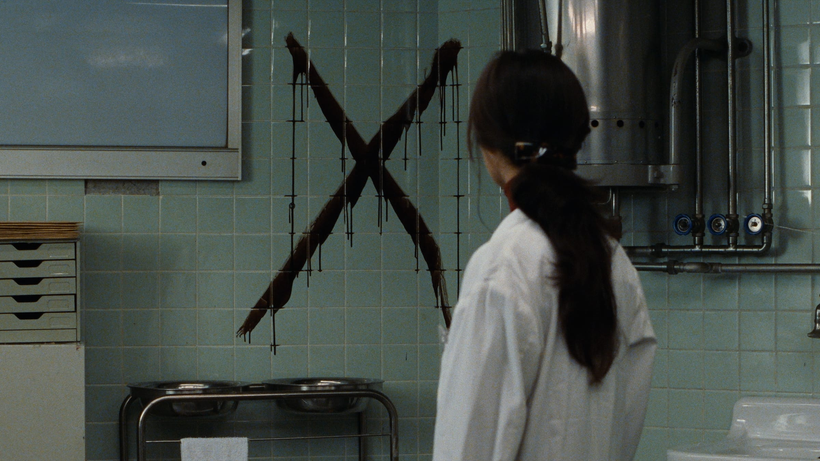
Liminal Horror is a horror RPG, so there’s a secondary focus beyond the nature of the mysteries themselves: survival. As a result, a given session will often shift between proactive play and reactive play. Proactive play is where the primary conflict is driven by player action. Reactive play is where external conflict occurs and the players must act in response to avoid harm or consequence. This is where the Doom Clock comes into play, detailing events that occur if the Investigators don’t act in time and the consequences if they fail to stop the horrors.
Beyond horror, juggling between these two is a useful means of preventing a moment from occurring where the players feel that they have been stumped and don’t know what to do next, as something will eventually occur for them to react to, providing a new avenue of investigation. A good mystery usually has a source of tension, which this can help manage. For example, let’s look at a standard murder mystery investigation. As long as the murderer is free, they will continue to seek out new victims until their ultimate goal is achieved. If the Investigators hope to prevent further harm, they will have to act to stop the killer before they strike again. But if they’ve hit a brick wall and have no more options to pursue, the killer will strike again, creating an immediate situation to react to. This also makes the consequences of inaction abundantly clear: if the Investigators don’t act, more people will die.
Layering the Mysteries

Another means of ramping up the tension is layering mysteries, creating greater confusion for the Investigators to attempt to sort out. Generally speaking, there’s largely two ways to go about this.
The first is the “Lovecraft Country” approach. This is where you have a location that is beset by a wide variety of generally disconnected horrors. Each mystery is resolved individually, but over time it becomes apparent that there is some grand influence that connects them all. When you’re running multiple of these mysteries at once, the primary goal is to ramp up tension, as the players will have to decide where they want to put their effort, and there will be consequences if a mystery is left ignored. This is somewhat easy to set up, as you don’t need to worry about too many connecting details beyond the grand conspiracy.
The other method is the “Mystery Web” where there are several concurrent mysteries going on that have direct connecting threads between them, even if the answers to the questions they pose are not the same. Let’s work through an example of this, building off of the web of clues above.
First, we need a location. Let’s just use a real-life place and go with Tillamook, Oregon, a small city close to the coast that’s built around the dairy industry and has a few thousand residents.
For our mystery, who would be our most important concerned parties? For simplicity, let’s create three people, but note you could expand this to cover entire factions.
- The Mayor
- The Chief of Police
- The Dairy Farmer, who owns the largest operation.
Let’s give this place some mysteries to investigate. We’ll start with 3.
- A film crew shooting a show at the city has gone missing.
- A body was found with signs of a cult ritual.
- Local legends say dark creatures stalk the woods nearby.
How are our NPCs involved? The goal is to try and connect each of them to two of the mysteries in some manner.
- The Mayor called the film crew, thinking the publicity would be good for the town. She’s secretly aware of the cult and approves of their existence, but isn’t a member herself and keeps their existence secret.
- The Police Chief wants to avoid state and federal regulators from coming into the town, so he’s been keeping aspects of the cases secret, including the stranger aspects of the presence of the dark creatures.
- The Farmer is a cult member and was the last person to see the film crew before they disappeared.
With our framework set up, how do we connect the threads? A strange plague was unleashed upon the town in the 90s that corrupted its residents, reanimating their corpses and turning them into strange creatures. The townsfolk learned of a ritual that could be performed to stop a body from being transformed, which led to the formation of the cult, whose duty is to perform this ritual while keeping the horrors hidden. The film crew were investigating this mystery when they disappeared, but the cult themselves did not have a direct hand in it. The corruption is starting to get out of hand and the cult have lost control, putting the town and later the rest of the state in jeopardy unless someone acts.
And there we go. While it needs some more meat on the bones, that’s enough of a mess to get you something like 10 sessions of play trying to unravel the mysteries and save the town from impending doom. Use the means discussed above for creating clues and fleshing out your web and you’ll be golden.
Final Advice
Light Twin Peaks spoilers ahead.
As the story goes, when David Lynch and Mark Frost were filming the pilot for Twin Peaks, there was a moment where crew member Frank Silva was accidentally caught in the mirror of a scene with Laura Palmer. While the initial thought was to reshoot, Lynch viewed this as a “happy accident” and decided to keep the shot as-is, adding in Silva as a new character BOB who would go on to be very important to the trajectory of the series. If David Lynch can alter his series based on an unanticipated accident during filming, you too can change how your mysteries are presented after you’ve compiled your initial notes.

To expound upon this, nothing is “real” in the narrative of a TTRPG until it is said at the table. Just because you wrote something in your notes, it doesn’t mean that you are locked in on that idea. As the players interact with your mystery, things may change, so be prepared to be a bit flexible and pivot as needed. That’s not to say you should rug-pull your players just for the sake of it, just know that you cannot perfectly anticipate how your players will intercede in your plans and sometimes deviating from your initial plan is going to be beneficial for the entire table.
For my final bit of advice here, running mysteries became much more freeing when I stopped caring if the players solved them. As a GM, I’m here to be a neutral arbiter. I trust that I’ve set up the mystery in a coherent manner (or can bend it that way during play), so it’s down to the players to use the tools at their disposal to reach an ideal outcome. We’re going to get some kind of ending no matter what, even if it’s “the bad guy gets away”. We don’t always need to force a perfectly happy ending and sometimes the messier ones can be more satisfying.
For more information on creating clues and running mysteries/investigation/horror, the Deluxe Edition Facilitator’s Guide p.47-116 is packed full of essay’s and advice.